Angst, Jules, et al. “Gender differences in depression.” European archives of psychiatry and clinical neuroscience 252.5 (2002): 201-209.
Germany berlin
Retrieved from https://link.springer.com/article/10.1007/s00406-002-0381-6
Gender differences in depression
Epidemiological findings from the European DEPRES I and II studies
12 august 2002
wave I:
38,434 men and 40,024 women;
wave II:
563 men and 1321 women treated for depression
This shows that a significant population never seeks help or treatment so we should reflect these values in our film by having the main character both being ignored by others and themselves neglecting their own symptoms in the hope to show others not to do the same
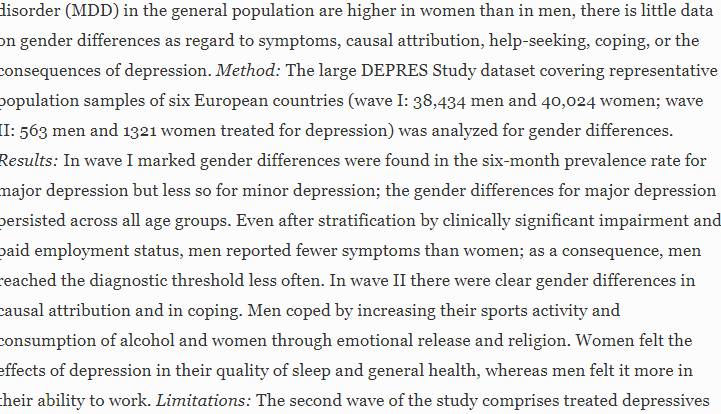
Table 1 demonstrates the well-established higher prevalence
of the criterial depressive symptoms among females
(22.4%) than among males (13.9 %).
This shows a higher amount of the female population have diagnosed depression with apparent symptoms the percentage shows a societal priority over the treatment and diagnosis of females over males so we shall show him in the minority and a lesser priority
The second wave of the study comprises
treated depressives only and may be less representative
than the first wave.
Implies that men are more receptive to treating depression
This means we will represent the untreated population showing an unwillingness and hidden focus on depression. the study shows
Since treated samples are heavily biased by the fact
that females seek treatment more frequently, generalizable
results can only be derived from community studies.
This further backs up my point as the anomaly may be due to lack of incentive to go to psychiatrists
Bryant, Jennings, and Dolf Zillmann. “A retrospective and prospective look at media effects.” The Sage handbook of media processes and effects (2009)
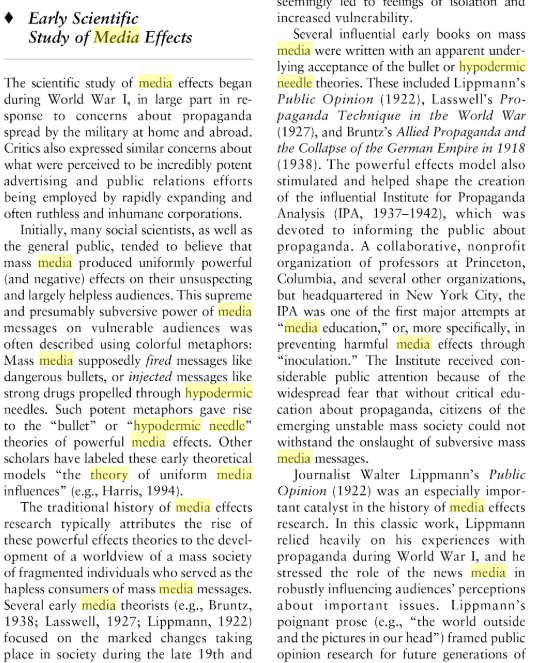
The theory of uniform media influences
This collection of theory’s like the hypodermic needle theory are the most formative and oldest theory’s that prove the techniques that have been used since the theory’s conceptualisation.
internet
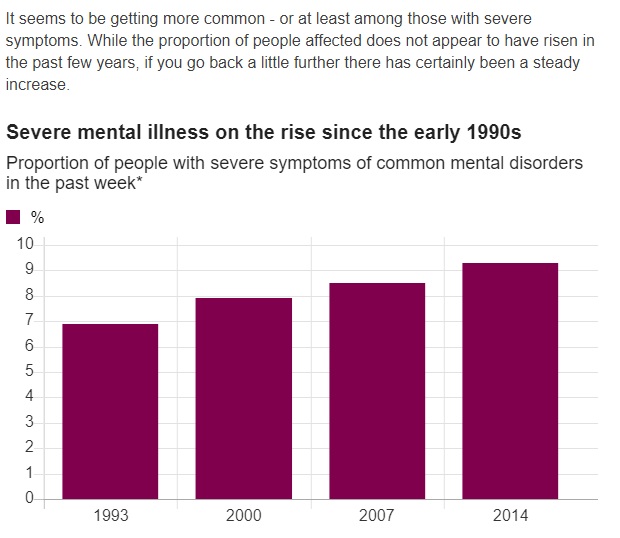
A number of theories have been put forward for this. The economic uncertainty of the past decade has particularly affected the young, making it harder to get on the career ladder.
And psychiatrists and mental health campaigners are increasingly raising questions about whether social media increases peer-group pressure and online bullying.
Campaigners have described the progress as wonderful but warn against complacency.
Despite the improvements, nearly nine in 10 people who have had mental health problems report they have suffered stigma and discrimination.
For all the positives, there’s a long way to go, it seems.
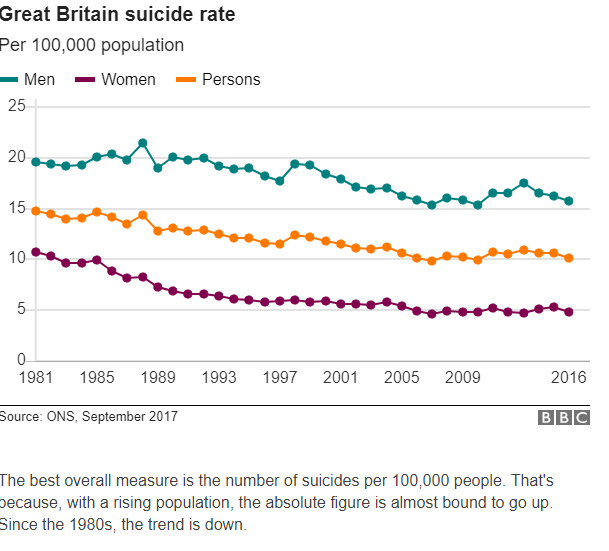
BBC mental heath charts
By David Brown and Nick Triggle BBC News 4 December 2018
https://www.bbc.co.uk/news/health-41125009
”
Classified as a drama, animation or documentary that runs for over a minute to under 40 minutes, short films are a great way to get noticed at festivals, showcase your talent as a filmmaker and create some compelling work to engage an audience.”
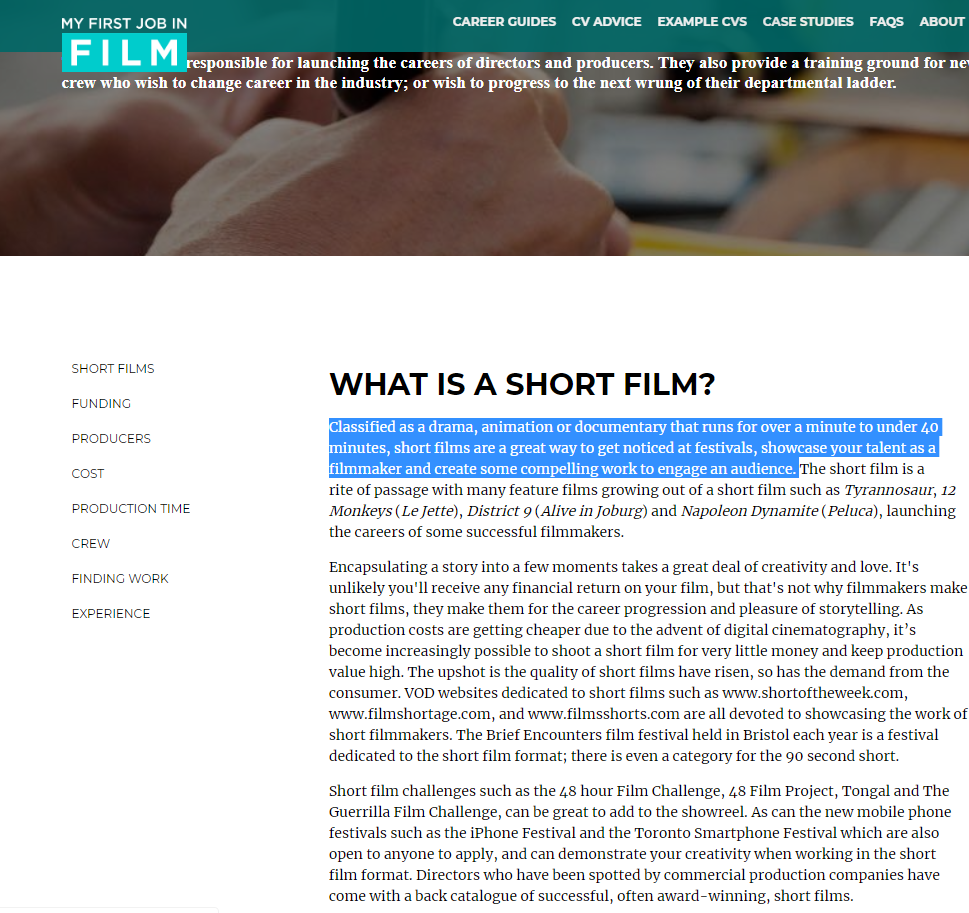
my first job film 2016

 Peters Media Blog